
 English
 русский
 العربية
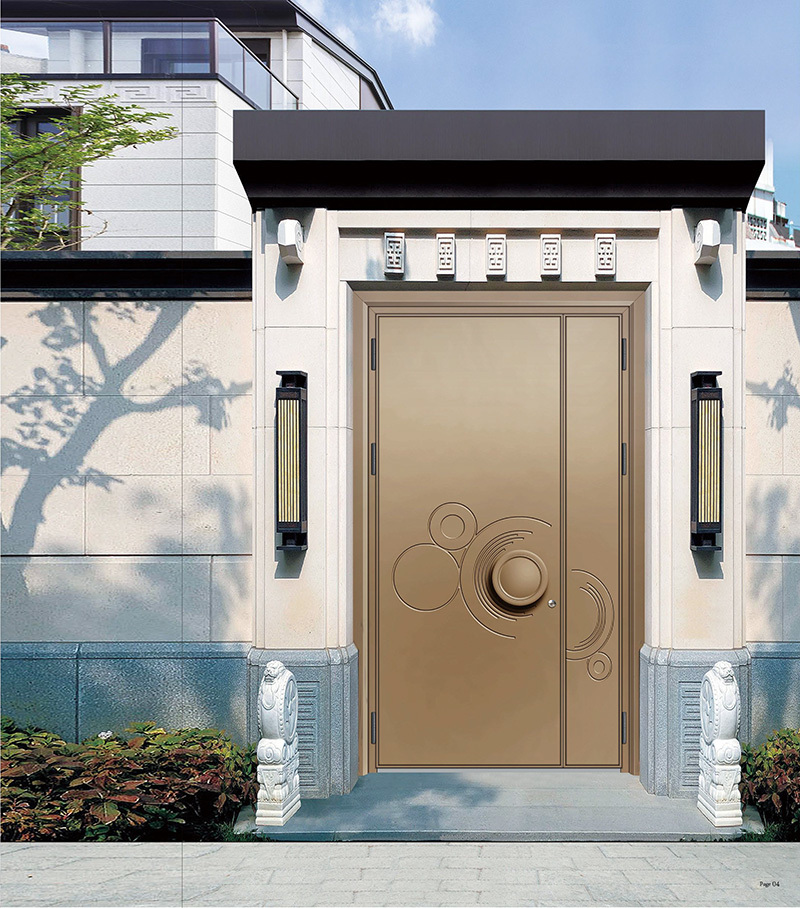
Armored Door Enhancing High-Security Protection and Structural Resistance in Modern Building Safety Systems
Published Time:
2026-06-26
Reinforced security door designed with high strength materials and multi layer structure providing enhanced protection against forced entry impact and burglary for residential and commercial security applications
In modern residential buildings, commercial facilities, financial institutions, and industrial security environments, physical security is a critical requirement. Among advanced protective building components, the Armored door plays a key role in providing high-level resistance against forced entry, impact, fire exposure, and external threats, ensuring safety and controlled access to protected spaces.
An armored door is a reinforced security door constructed using high-strength steel plates, composite core materials, and multi-layer protective structures. It is designed to withstand mechanical force, cutting tools, drilling attempts, and other forms of intrusion. The internal structure typically includes a steel frame, reinforced locking system, insulation layers, and protective surface panels.
One of the key advantages of an armored door is exceptional anti-intrusion performance. The reinforced steel core and multi-point locking system significantly increase resistance against burglary attempts, making it suitable for high-security environments such as banks, government buildings, and data centers.
Another important benefit is structural durability. Armored doors are engineered to withstand repeated impact, pressure, and mechanical stress without deformation. This ensures long-term stability and reliable protection in demanding usage conditions.
Fire resistance is also a major feature in many armored door designs. Specialized fireproof core materials help slow down heat transfer and prevent flame penetration, providing critical time for evacuation and emergency response during fire incidents.
Sound insulation and thermal performance are additional advantages. The multi-layer structure helps reduce noise transmission and improve indoor temperature stability, making armored doors suitable for residential apartments, hotels, and office buildings.
Advanced locking systems further enhance security. Many armored doors are equipped with anti-drill locks, biometric access systems, digital password locks, or multi-point mechanical locking mechanisms to improve access control and prevent unauthorized entry.
In addition, modern armored doors are designed with enhanced anti-corrosion coatings and weather-resistant finishes. This allows them to maintain appearance and structural integrity in outdoor or high-humidity environments over long periods.
Customization flexibility is another important feature. Armored doors can be manufactured in different sizes, thickness levels, and security grades to meet specific project requirements, ranging from residential security to high-risk industrial protection.
Armored doors are widely used in private residences, luxury apartments, commercial buildings, warehouses, military facilities, and critical infrastructure sites. Their combination of strength, safety, and functional design makes them a fundamental component of modern security architecture.
As global security standards continue to rise, armored doors remain an essential solution for protecting people, assets, and sensitive environments from physical threats.

DO YOU HAVE QUESTIONS?
Get In Touch With Us!
Fax:+86-0750-8307801
Add:Heshan City, Republican Town, Tiegang Industrial Zone II

Scan to chat
with customer service